
Taijiquan Meditations for the Solo Form
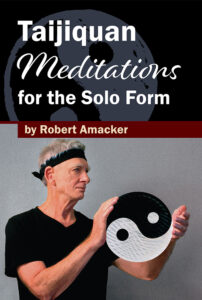
What the Book Explores
Taijiquan Meditations for the Solo Form is about the internal work that gives the Solo Form its meaning. Rather than concentrating on choreography or the outward appearance of particular movements, the book examines the habits of attention, alignment, movement, and awareness that the Form is intended to develop.
The thirteen meditations are practical themes for focused practice. Each invites the student to concentrate deeply on one aspect of the Form, allowing that quality to become more natural and eventually more automatic.
Who It Is For
This book is for Taijiquan students who want to understand what they are actually training when they practice the Solo Form. It is especially useful for students who already know some form and are ready to look beyond memorizing movements toward the principles and internal skills behind them.
Although Robert Amacker’s own training was in Yang Style Taijiquan, the ideas in the book are not limited to one version or lineage of the Form.
Inside the Book
The book is organized around thirteen meditations—specific aspects of Solo Form practice to be examined one at a time with sustained attention.
Excerpt from the Introduction to Taijiquan Meditations for the Solo Form
Solo Form practice is absolutely critical to Taijiquan acquisition. It helps create the foundation for the skill of making Taijis, but also makes possible the effective use of those Taijis.
The exact order and external forms of the solo exercise are the least important things about it. The only critical requirement of these movements is that they accommodate the acquisition of certain internal habits. Taijiquan has at its disposal a variety of historical variants of the Form, even within well-established styles. There could be infinitely more examples, all of which could satisfy this critical requirement, but none of which, on account of their outward forms alone, would necessarily be doing so.
To simply parrot the external movements of Taijiquan, no matter how perfectly, is to entirely miss the point of the exercise. It is not a performance to be perfected, but an opportunity to focus on certain internal habits.
Contents
About the Author
Preface
Introduction
Chapter 1. Plucking up the Back
Chapter 2. The Fundamental Somatic Concept — Li and Stagnancy
Chapter 3. Chansijin of the Arms
Chapter 4. Chansijin of the Legs
Chapter 5. Separation of Substantial and Insubstantial
Chapter 6. Control of the Knees
Chapter 7. Rooted Movement
Chapter 8. Keeping the Feet Flat on the Floor
Chapter 9. Empty Steps
Chapter 10. Hand Posture
Chapter 11. Taoist Breathing
Chapter 12. Parameters of Size and Speed
Chapter 13. Martial Meaning
Postscript
Glossary
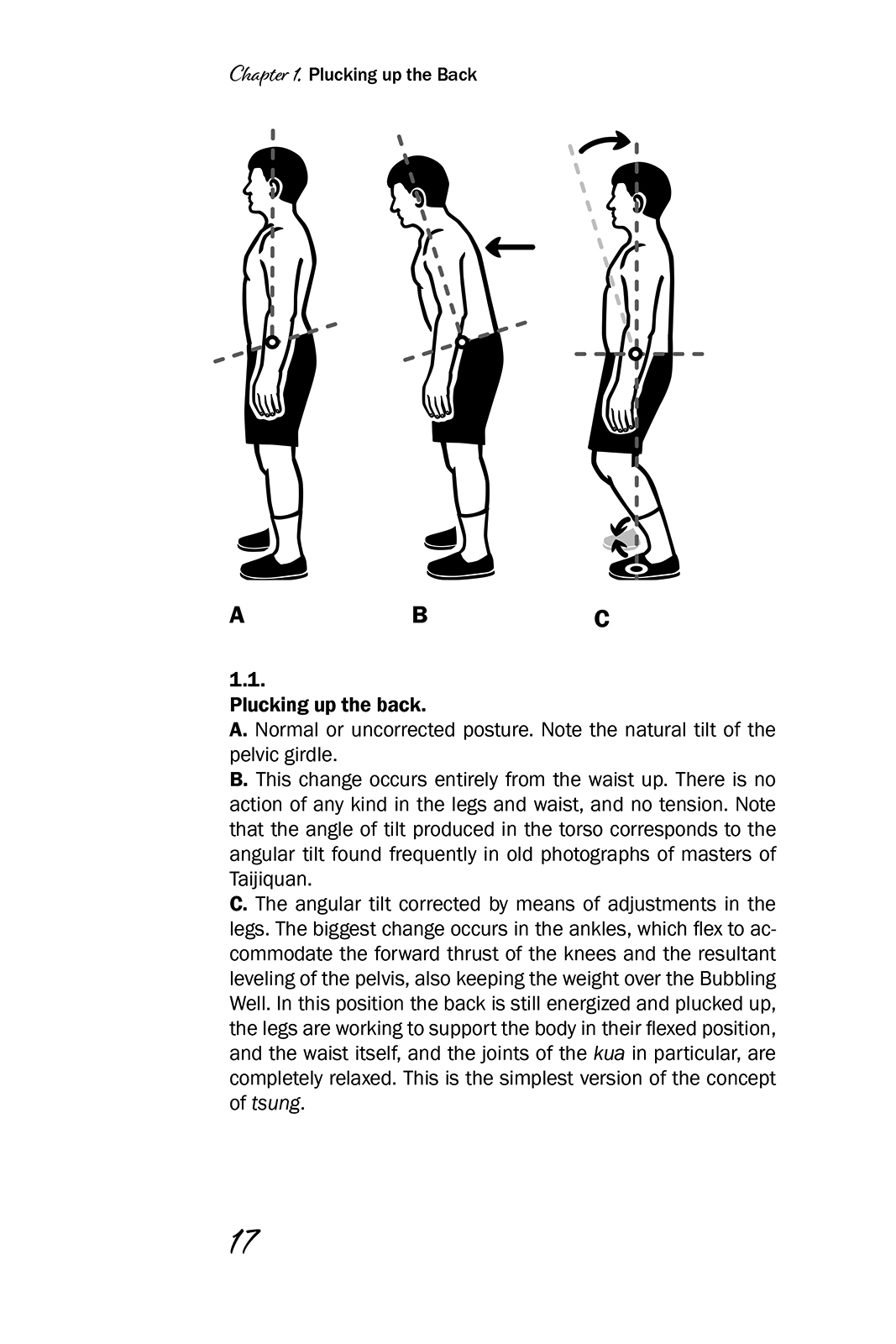
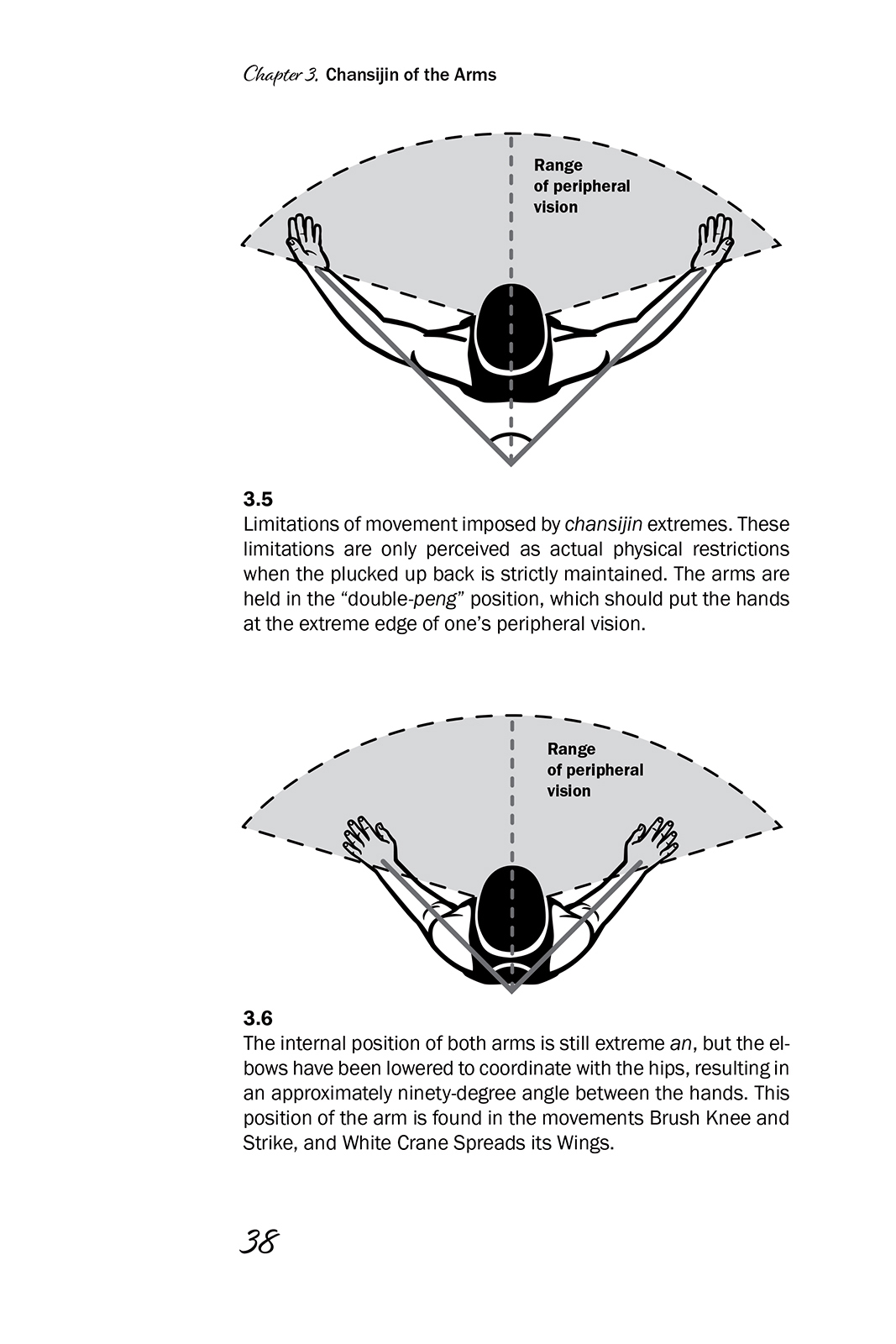
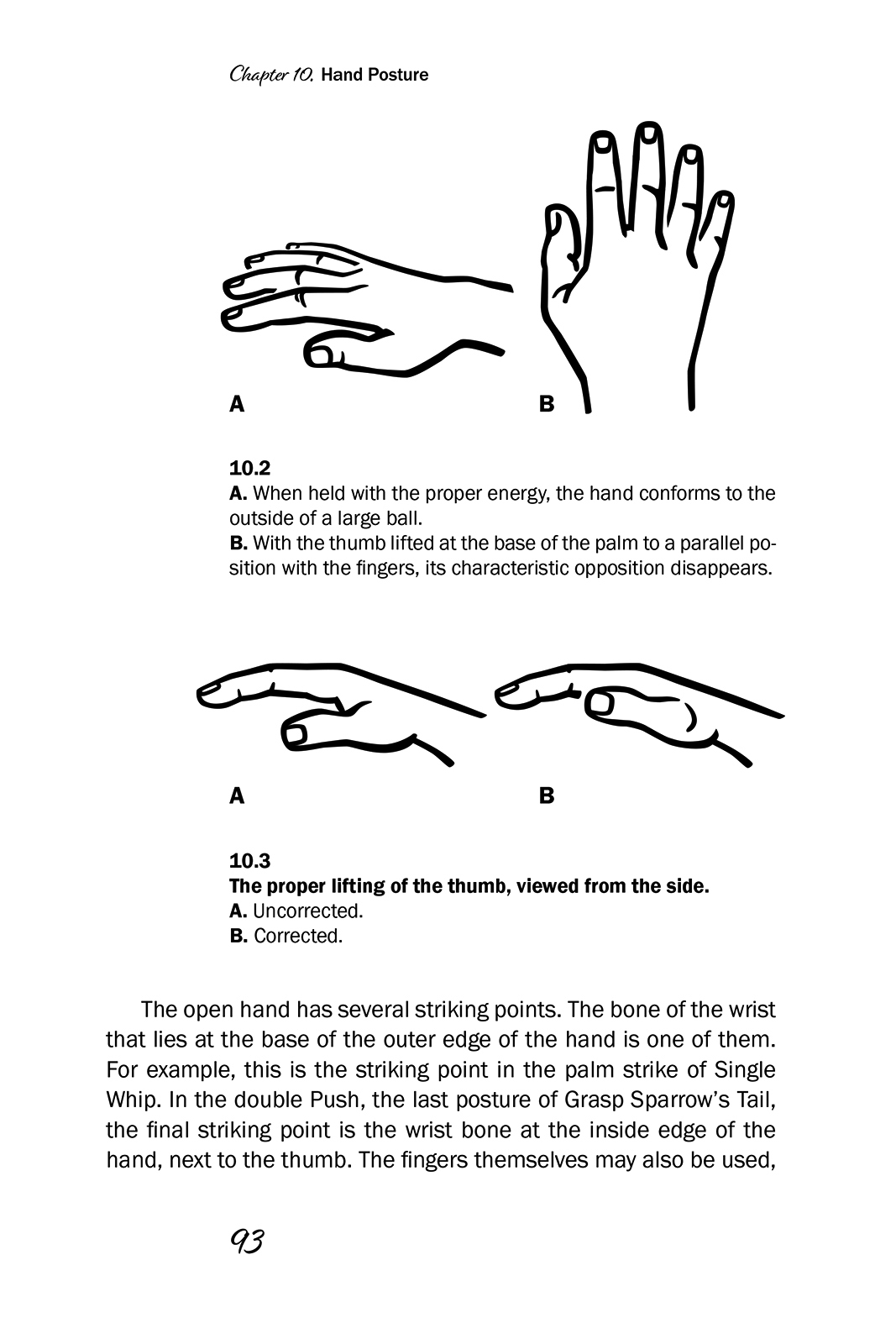
Selected illustrated pages from Taijiquan Meditations for the Solo Form
About the Author
Robert Amacker (1944–2021) was a Taijiquan teacher, writer, and researcher who devoted more than fifty years to the study and practice of Yang Style Taijiquan. He studied with Professor Zheng Manqing and later with William C. C. Chen, Benjamin Lo, and Master Chu Chufang.His writing focused on the internal principles and classical foundations of Taijiquan. He was co-author of The Essence of T’ai Chi Ch’uan: The Literary Tradition and author of The Theoretical Basis of Taijiquan and Taijiquan Meditations for the Solo Form.
Read More About Robert Amacker